Red Deer Real Estate Market Update: What Changed in the First Half of 2026

Every January I hear the same question, and by July it gets louder: what is the market actually doing? Not what the national headlines say. What is happening here, in Red Deer, on our streets.
So, I pulled the MLS numbers for the first six months of 2026 and put them side by side with the same period last year. The short answer is that the market has shifted, and if you are thinking about buying or selling in the next year, the details matter.
Still a Seller's Market, but Not an Automatic One
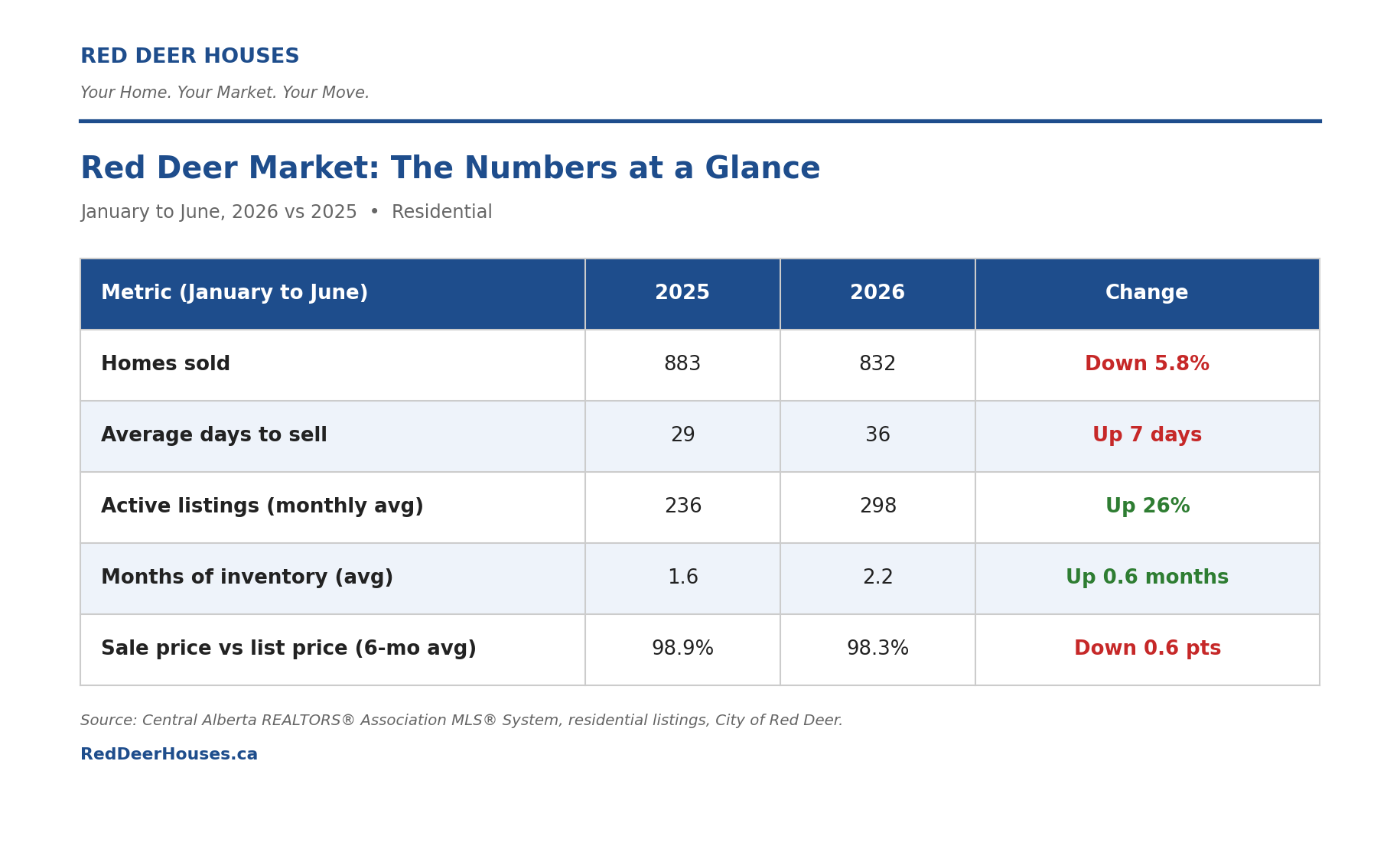
Let me start with the context, because the numbers above could read scarier than they are. Anything under three months of inventory is generally considered a seller's market, and Red Deer finished June at 1.8 months. Homes here are still selling in about five weeks at over 98 percent of asking price. In most Canadian markets, those would be celebrated as strong conditions.
What has changed is the margin for error. A year ago, nearly everything sold quickly at close to full price. The market forgave overpricing, tired paint, and cluttered photos because buyers had so few options. That forgiveness is gone.
What Actually Changed This Year
Buyers have more to choose from
Active listings ran ahead of last year in every single month. June finished with 337 active residential listings compared to 282 a year earlier, and the gap in May was even wider at 360 versus 268. That is the most selection Red Deer buyers have had in over a year, and it changes how they shop. When there are three comparable homes instead of one, buyers compare, wait, and negotiate.
Homes are taking a week longer to sell
The average days to sell climbed from 29 to 36. A week does not sound like much, but it reflects a real change in buyer behaviour. The first-weekend sale is no longer the default. It still happens, but now it happens to the homes that are priced right and show well, not to everything with a sign on the lawn.
Sellers are giving up a bit more at the table
Homes sold for between 97.6 and 98.6 percent of list price through the first half of 2026, down from roughly 99 percent for most of early 2025. On a typical Red Deer home, that difference works out to a few thousand dollars more going to the buyer in negotiation. Not dramatic, but a clear sign that leverage has shifted slightly.
Sales volume eased, but only a little
832 homes sold in the first half of 2026 compared to 883 last year, a dip of just under six percent. Demand did not fall off a cliff. Buyers are still out there and still buying. They are simply less rushed than they were.
The June Surprise Nobody Is Talking About
Here is the number that caught my attention. After five months of the market gradually loosening, June tightened. Months of inventory dropped from 2.4 in May to 1.8 in June, the lowest reading of the entire year, and active listings fell from 360 to 337.
That means one of two things happened: sales absorbed inventory faster heading into summer, or fewer new listings came on. Either way, it is a caution flag for anyone waiting on the sidelines for a true buyer's market. If July confirms the trend, the extra selection and negotiating room buyers enjoyed this spring may prove shorter lived than expected.
What This Means If You Are Selling
The market is still on your side, but it now rewards preparation and punishes guesswork. The homes that sell in the first two weeks at strong prices are the ones priced accurately from day one and presented properly. The ones that chase last year's prices sit, go stale, get reduced, and often end up terminated or expired. We saw that pattern clearly in the spring data, where failed listings were up sharply from last year.
Getting the price right at the start matters more right now than it has at any point in the last two years. The good news is that a well-priced Red Deer home still sells fast and close to asking. The market has not turned on sellers. It has just stopped doing their work for them.
What This Means If You Are Buying
You have more selection and more negotiating room than at any point since early 2025. Sellers are more open to conversations about price, conditions, and possession dates than they were a year ago.
But June's tightening is worth taking seriously. At 1.8 months of inventory, Red Deer is still firmly in seller's market territory, and the data does not support waiting for prices to fall meaningfully. If you find the right home at a fair price, the numbers say the smart move is to act on it rather than wait for a discount that may never arrive.
The Bottom Line
Red Deer's market is moving from very tight to simply healthy. That is not a downturn. It is a rebalancing, and it creates opportunity on both sides for people who understand the conditions and price accordingly.
If you want to know what these numbers mean for your home or your neighbourhood specifically, reach out. I am happy to run the numbers for your street, no strings attached.
Frequently Asked Questions
1. Is the Red Deer housing market slowing down in 2026?
It is rebalancing rather than slowing down. Sales dipped about six percent in the first half of 2026 and homes are taking about a week longer to sell, but at 1.8 months of inventory in June, Red Deer remains a seller's market. Homes are still selling in roughly five weeks at over 98 percent of asking price.
2. How long does it take to sell a house in Red Deer right now?
The average home in Red Deer took 36 days to sell in the first half of 2026, up from 29 days during the same period in 2025. Well-priced and well-presented homes still sell considerably faster than the average, while overpriced listings tend to sit well beyond it.
3. Is it a good time to sell a house in Red Deer?
Conditions are still favourable for sellers, with low inventory and strong sale-to-list ratios. The difference in 2026 is that pricing accuracy matters much more. Homes priced correctly from day one sell quickly and close to asking, while overpriced homes are increasingly ending up reduced, terminated, or expired.
4. Should buyers wait for prices to drop in Red Deer?
The data does not currently point to falling prices. Inventory actually tightened in June to its lowest level of the year, and homes are still selling at over 98 percent of list price. Buyers do have more selection and negotiating room than last year, which is an argument for acting while those conditions last rather than waiting.
5. What is months of inventory and why does it matter?
Months of inventory measures how long it would take to sell every home currently on the market at the current pace of sales. Under three months is generally a seller's market, three to six is balanced, and over six favours buyers. Red Deer finished June 2026 at 1.8 months, which keeps it in seller's market territory.
Categories
Recent Posts